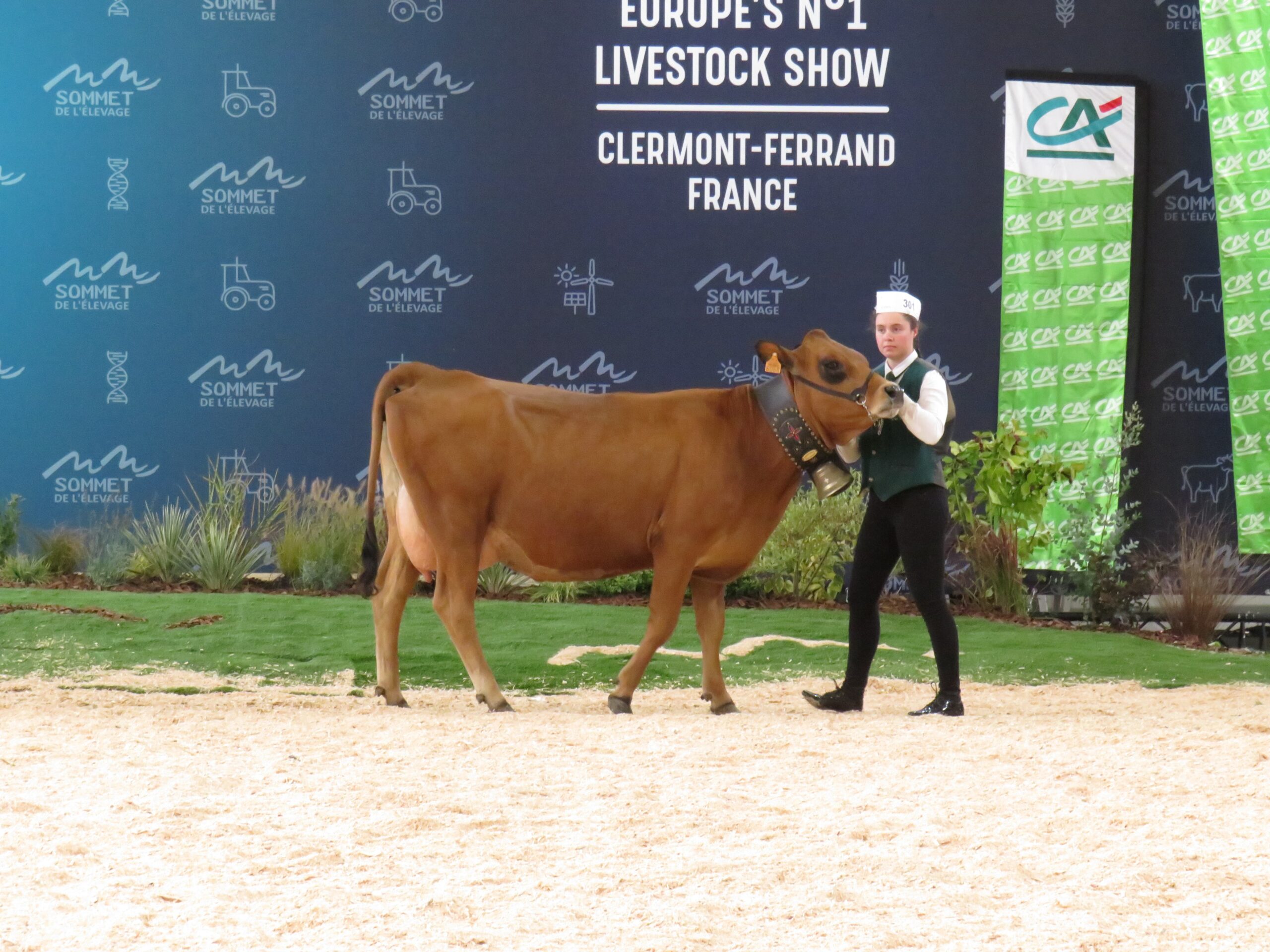
On a French dairy farm, the decision about which cow will become a future breeding heifer and which one will produce a beef calf is made based on genetic results.
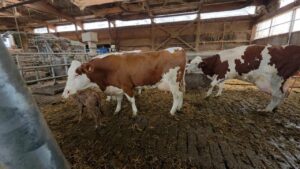
During a study visit organized as part of the Sommet de l’Élevage 2026 fair, journalists from AGROPRESS at the GAEC Sainte-Bonnette farm in Azeray during a study tour organized as part of the Sommet de l’Élevage 2026, journalists from AGROPRESS were introduced to a system where genomic selection, sexed semen, and the crossbreeding of the Montbéliarde dairy breed with the Charolais beef breed are used as parts of a unique production strategy.
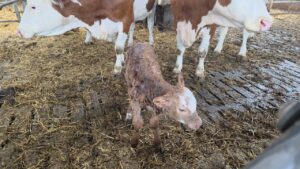
The goal is to retain the offspring of the genetically most promising cows to rebuild the dairy herd, while the others are used to produce calves of higher value for meat production.
The GAEC Sainte-Bonnette farm has about 450 head of cattle, of which approximately 200 are milking Montbéliarde cows.
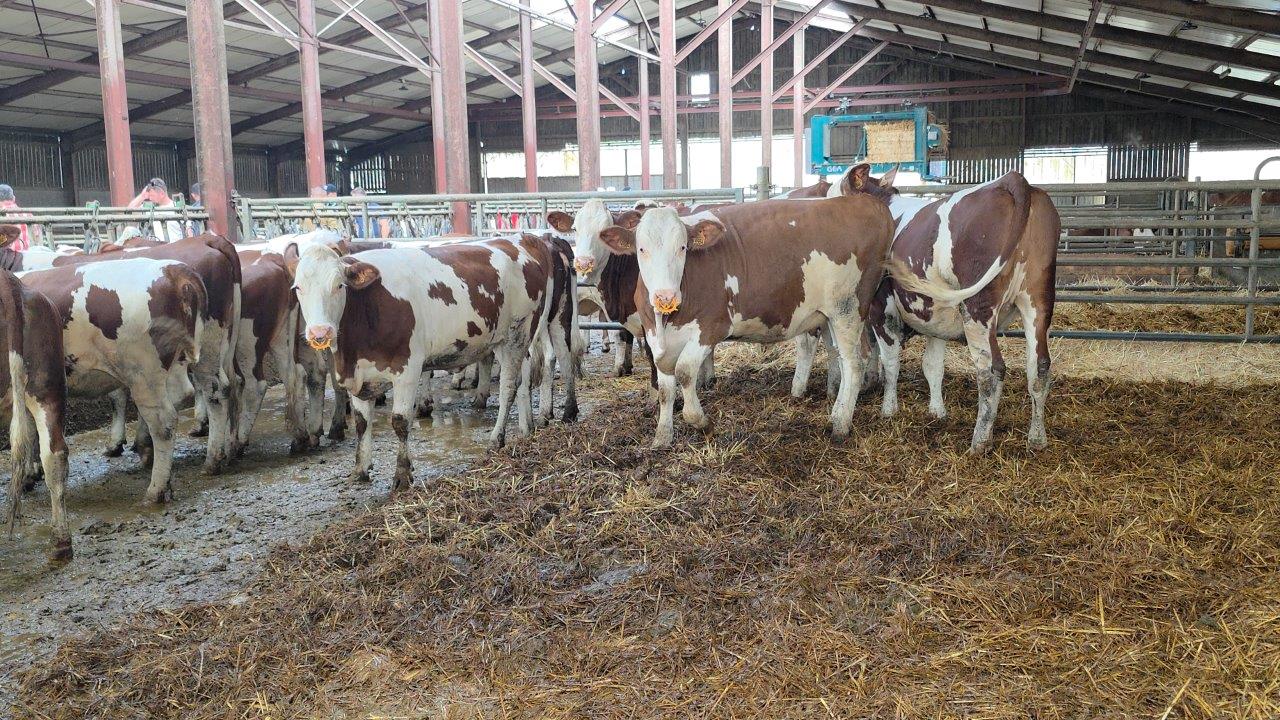
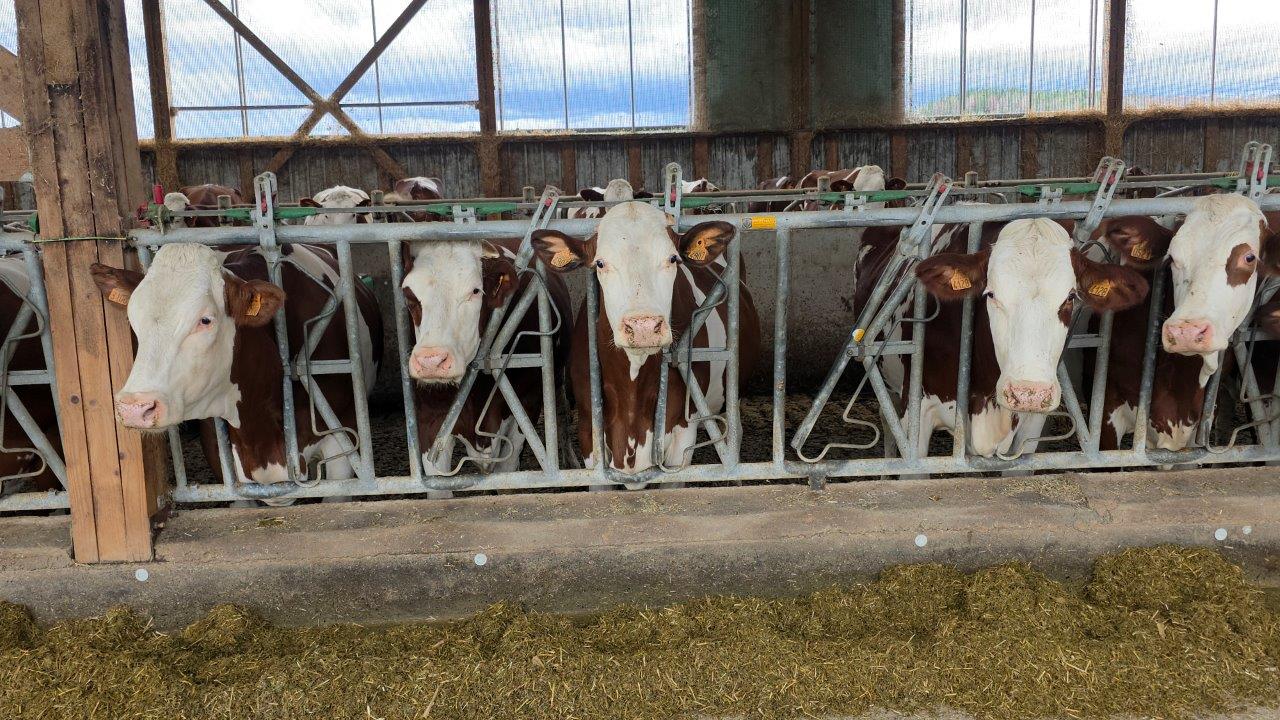
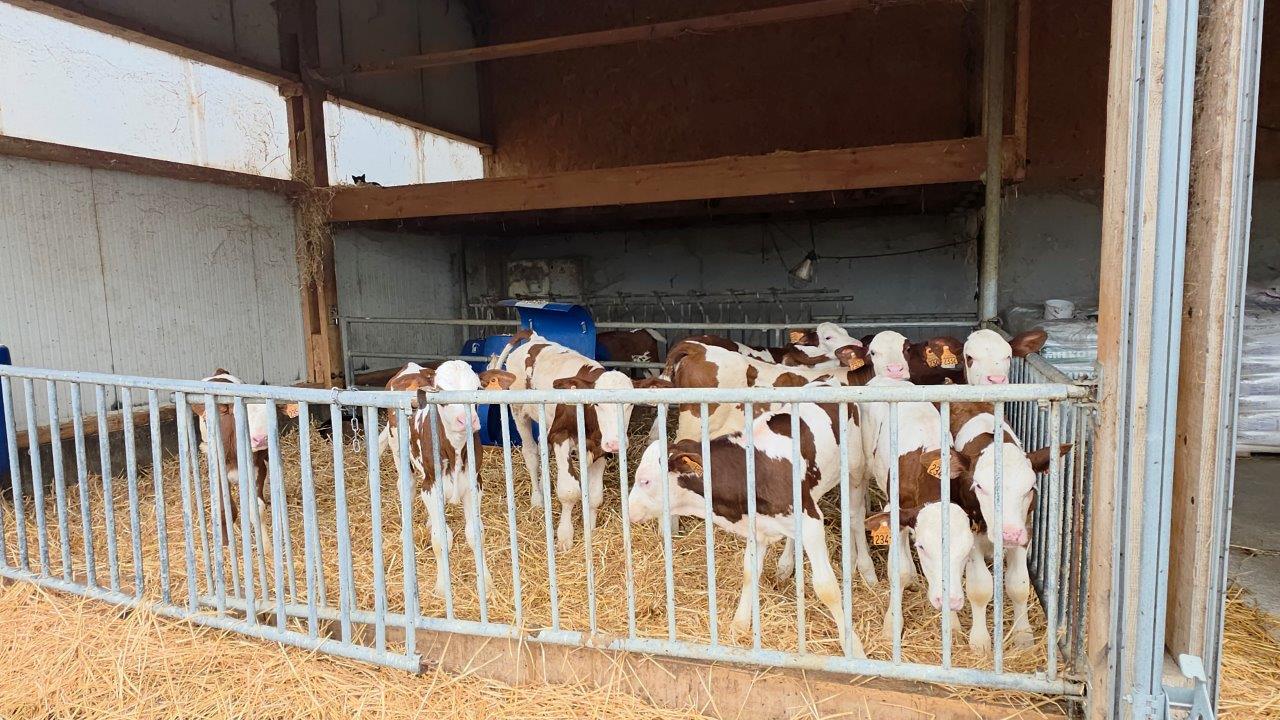
Production is organized on approximately 390 hectares of land, and about two million liters of milk are produced annually. The average milk yield reaches about 10,400 liters per cow, while milking is performed by three robots. The farm is managed by three equal partners, and the milk is delivered to the Sodiaal cooperative. However, one of the most interesting parts of the production organization is not the robotic milking, but the way the genetic progress of the herd is planned.
According to the explanations given during the visit, all female animals on the farm are genotyped, which provides data that helps assess their hereditary potential. The best-rated animals are used to produce future dairy cows, with the extensive use of sexed semen. The hosts stated that it is used for approximately 70 percent of inseminations, while cows with weaker genetic profiles are inseminated with Charolais bull semen.
In this way, the farm seeks to simultaneously accelerate the genetic progress of the dairy herd and increase the market value of calves not intended for further reproduction.
This system represents a practical application of the results of more than a century of development in animal genetics.
The term “genetics” was introduced by the English biologist William Bateson in the early 20th century, and after World War II, the development of artificial insemination and organized breeding programs made it possible to more rapidly spread desirable inherited traits. In France, selection systems based on progeny performance were developed in the late 1960s, which enabled a more reliable estimate of the breeding value of bulls. Since the beginning of the 21st century, genomic analyses have gained increasing importance, allowing for the assessment of young animals’ genetic potential even before they have achieved their own production results.
 Genomic selection is based on the analysis of a large number of genetic markers and their association with the animals’ production and functional traits. This allows for the assessment of potential for milk production, fat and protein content, fertility, longevity, udder health, and other traits. Genomic results are not a guarantee of future production, as it is also influenced by nutrition, health, housing, and farm management. However, they allow selection decisions to be made earlier and based on a greater amount of information than when selecting animals solely based on pedigree or phenotype.
Crossbreeding dairy cows with beef breeds is becoming an important part of this strategy. Female calves produced using sexed semen from the best dairy bulls are intended for herd replacement, while offspring from crossbreeding with Charolais have the potential for better carcass merit and a higher value in feedlot production. It is necessary to carefully select terminal sires for calving ease and weaning weight, especially when inseminating younger cows. The economic outcome also depends on the price of sexed semen, insemination success rate, the number of replacement heifers required, and the market price of the crossbred calves.
The prevalence of this approach in French cattle farming is also demonstrated by data from the Montbéliarde Breeders’ Association of the Puy-de-Dôme department. According to information published in 2025, about 40 percent of the inseminations of Montbéliarde cows in that department were performed with beef breeds. At the same time, local breeders were offered financial support for genotyping female cattle, covering half the cost for up to 20 analyses per year over three years. These data show that genomic selection and crossbreeding dairy and beef breeds are not limited to individual large farms, but have become part of broader breeding practices.
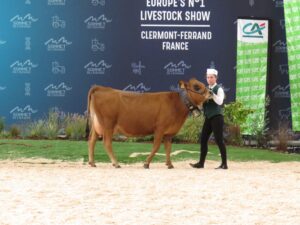
 The development of genetics was also one of the important topics at the Sommet de l’Élevage 2026 fair, where new selection approaches for dairy and beef breeds were presented. Particular attention was drawn to the application of genomics in assessing traits that were previously not easily measured, including hoof quality in the Limousin breed and milk characteristics important for cheese production. In beef cattle selection, in addition to growth and muscle development, calving ease, maternal traits, health, and functional longevity are playing an increasingly important role.
This is a significant change from previous systems, in which the emphasis was primarily on increasing the quantity of milk or meat produced.
The example of the GAEC Sainte-Bonnette farm shows how modern genetics are used in the daily management of the herd.
Genotyping helps in selecting future dairy cows, sexed semen increases the likelihood of getting female calves, and crossing with Charolais allows the remaining part of the herd to produce offspring for meat production. Instead of every cow having the same reproductive role, the breeding plan is adapted to her genetic potential and the farm’s needs. It is in this very combination of genetic data, reproduction, and production economics that one finds one of the most significant changes in modern European cattle farming.