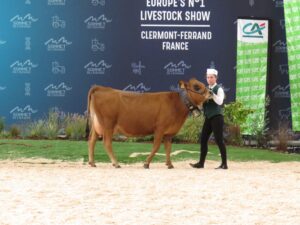
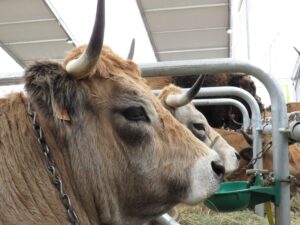
On the high plateaus of the French Central Massif, where winters can last for up to six months and summer grazing takes place on vast natural grasslands, the Aubrac cattle breed has been raised for centuries.
Recognizable by its light brown coat, dark-colored head, and distinctive horns, this breed was once used for work, milk, and meat production. Today, it is primarily intended for meat production, and its prevalence shows that extensive livestock farming can be economically viable even in areas with limited potential for intensive production.
According to data from a French publication on cattle breeds, adult bulls reach an average weight of approximately 950 kilograms, and cows around 650 kilograms. These are reference values from the publication, while actual weights vary depending on the animal’s genetics, diet, and age. The Aubrac is characterized by good maternal instincts, ease of calving, strong legs, and the ability to utilize pasture in various climatic conditions. In the traditional grazing system, the herd spends from mid-May to October on pastures, while during the winter they are housed in barns and fed primarily hay. The majority of calves are born from December to March, so they are sufficiently developed for the spring grazing season.
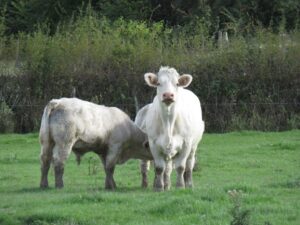
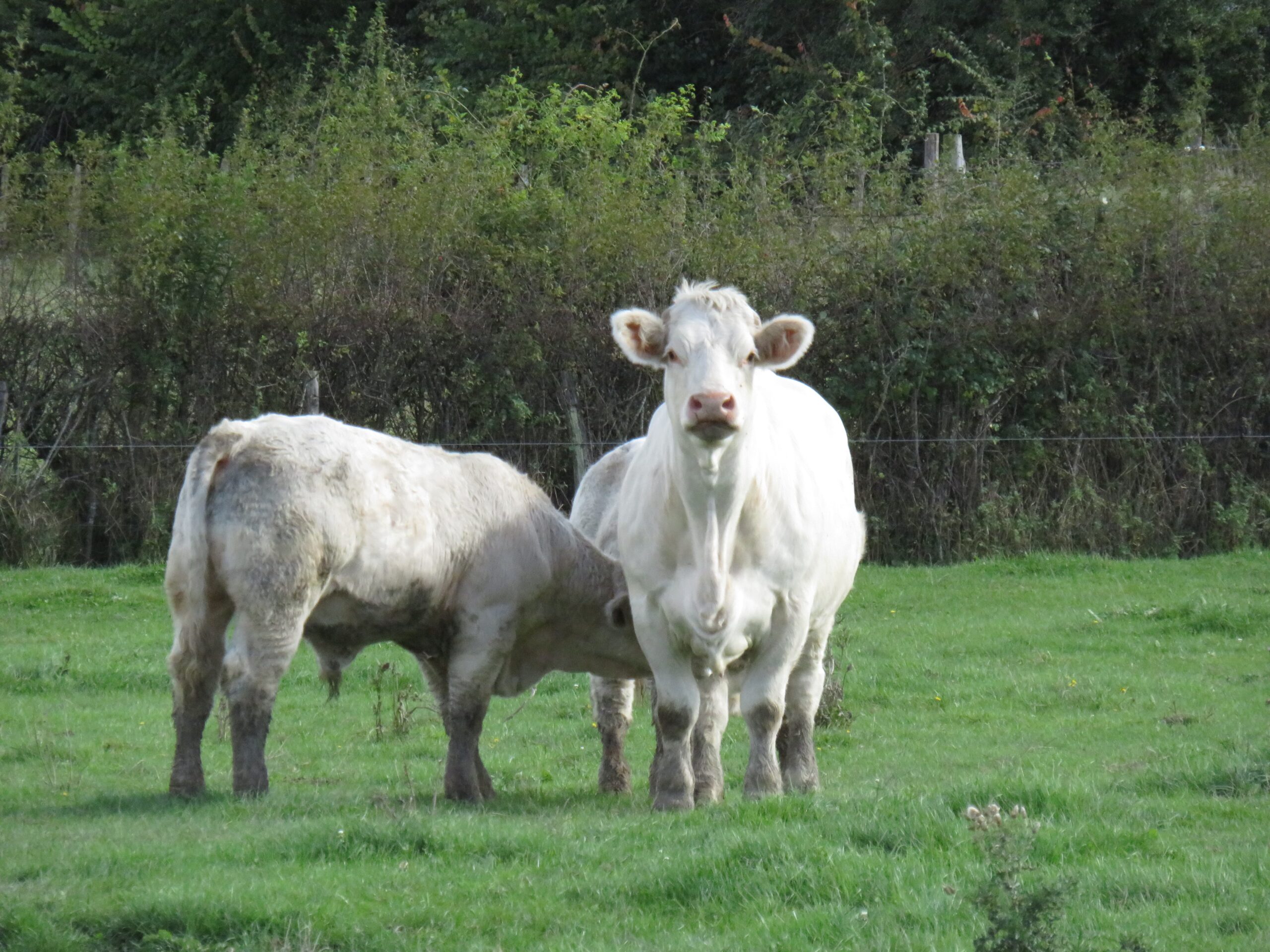
 A significant role in the breed’s economic development has been played by crossing with Charolais. A French publication states that approximately 40 percent of the Aubrac cows were used for crossing with Charolais bulls during the period observed. The goal is to take advantage of the Aubrac’s good maternal traits, its suitability for a grazing system, and ease of calving, while Charolais contributes a greater potential for offspring growth and muscle development. These calves are intended for meat production, while the purebred animals are kept for rebuilding the core herd and for selection. Crossbreeding, however, requires careful selection of breeding stock, especially when it comes to heifers.
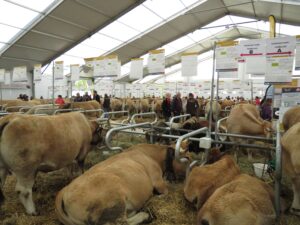
The Aubrac is regularly present at the international Sommet de l’Élevage fair in Clermont-Ferrand, where the best breeding stock from French cattle breeding is showcased. According to the OS Race Aubrac organization, around 60 animals of this breed are presented at the fair, with special presentations of the offspring from crosses between Aubrac and Charolais. The 2026 edition also featured a competition for Aubrac heifers, while for 2027, the breed has been announced as one of the fair’s central breeds. For breeders, this event is an opportunity to showcase their selection results, sell breeding stock, and establish contacts with foreign buyers.
The importance of Sommet de l’Élevage for breeders is also demonstrated by the experience of Laurent Foulquier, a cattle farmer from the Aveyron department who raises Aubrac and Charolais. In the official fair material, he explains that he regularly presents one or two breeding sires and that, thanks to the contacts made at the fair, he has sold animals to foreign buyers. After meeting with Spanish breeders, they visited his farm and bought two head of cattle, and he also established contacts with producers from Italy and the United Kingdom. “The Sommet allows me to make contacts that I couldn’t make anywhere else,” emphasizes Fulkié. His experience shows that the fair is not just a place for judging animals, but also an important marketplace for breeding genetics.
 The economic importance of the fair is also linked to regional meat production. In France, there are various fattening and marketing systems, including meat production with quality labels like Label Rouge and geographical indications. For certain products, the origin of the animals, feeding method, age, and production conditions are specifically regulated. In addition to fattening steers, the market also features categories of young stock that are sold to specialized fattening facilities after weaning. For farms in the Central Massif, this allows for various production strategies, depending on available pastures, facilities, and sales opportunities.
Mowing also plays an important role in maintaining mountain meadows. Grazing utilizes the vegetation of areas often unsuitable for arable farming, and proper herd management contributes to maintaining open grassland habitats. At the same time, cow longevity, good reproductive performance, and the ability to utilize bulky feed impact production costs. Data from the French Institute of Cattle Breeding for 2025, collected from 767 herds of the Aubrac breed, show an average of 65 cows per herd, an interval between calving of 383 days, and an average age of cows at calving of 6.5 years.
These indicators provide a more concrete picture of production than a comparison of body weight or daily gain alone.
The current position of the Aubrac breed is the result of adapting the breed to the modern market, while retaining the traits that made it suitable for mountain farming.
Its competitiveness is not based on maximum body weight, but on a combination of reproductive performance, forage utilization, longevity, and the ability to produce quality beef calves. For this reason, the Aubrac breed remains an important breed of the French Central Massif and an example of a production system in which genetics, natural resources, and the meat market are directly linked.