Mountain pastures, high-quality milk, traditional cheesemaking and expertise in maturation remain among the greatest assets of exceptional cheese producers. The results of the 38th edition of the World Cheese Awards, held on 12 November 2026 in Córdoba, Spain, provide further evidence of their importance.
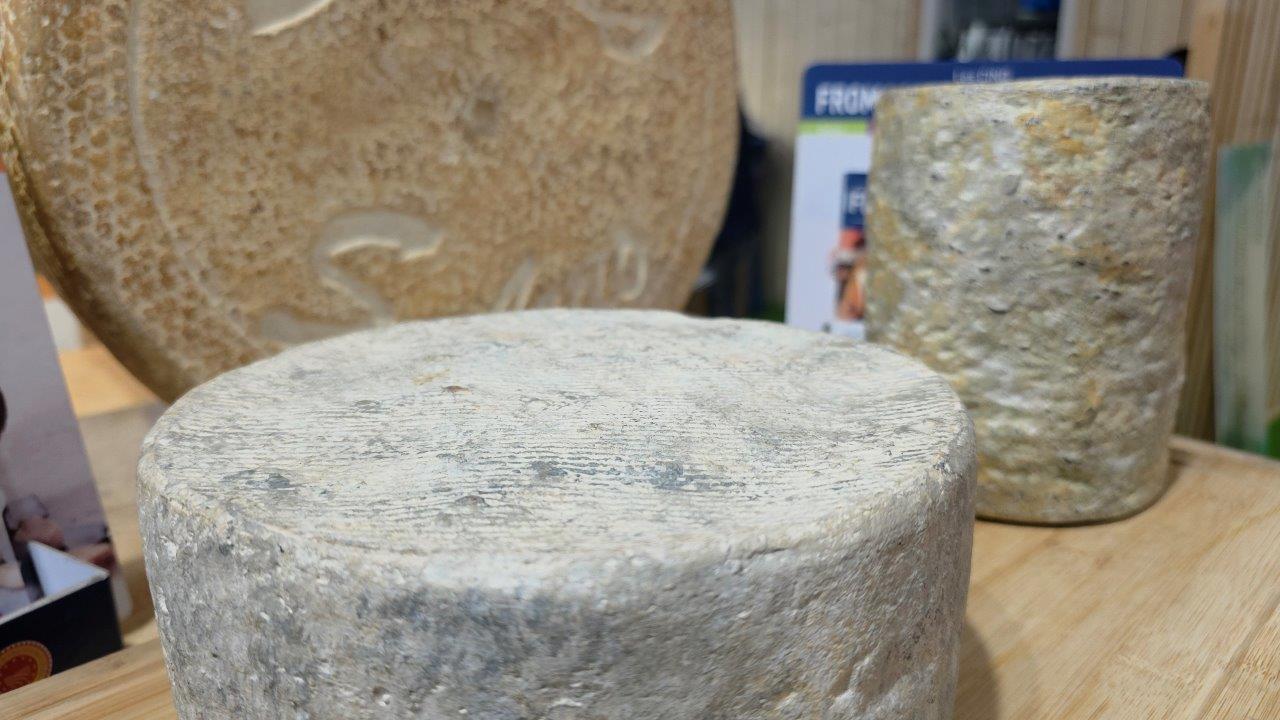
Competing against 5,330 cheeses from 45 countries, the French Comté AOP Fort des Rousses, matured for 24 months in the cellars of a former military fortress in the Jura Mountains, was named the world’s best cheese.
The largest edition in the competition’s history brought together 270 experts. European producers dominated the final, with Switzerland and Italy each securing four places among the world’s 14 highest-rated cheeses.
 Three cheeses tied for the world title
The final decision was particularly challenging. Three cheeses received 81 points: the winning French Comté, the French sheep’s milk cheese Ossau-Iraty from Agour, and Switzerland’s Le Gruyère AOP Réserve, matured for 18 months by Gourmino.
The judges had to apply a special tie-breaking procedure involving the removal of extreme scores to determine the winner.
The Comté impressed with its complex flavours, distinctive nutty and roasted notes, and exceptionally persistent finish.
A former military fortress transformed into cheese maturation cellars
The world champion cheese was presented by Fromageries Arnaud, a family-owned company established in 1907 that markets its products under the JuraFlore brand.
Since 1998, the company has used Fort des Rousses, a former military fortress in the Jura Mountains near the Swiss border, to mature its cheeses.
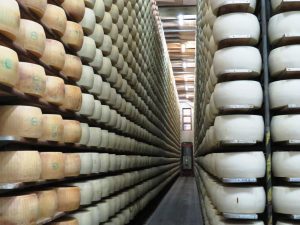
The fortress’s extensive vaulted cellars and thick stone walls provide particularly favourable maturation conditions. Temperature, humidity and microbial activity gradually shape the cheese’s flavour, aroma and texture.
The history of Comté dates back to the Middle Ages. As early as the 13th century, farmers in the Jura pooled their milk to produce large cheese wheels that could be stored throughout the long winter months.
This cooperative production model, organised around local cheesemaking facilities known as fruitières, remains central to the Comté industry today.
Comté received French protected designation of origin status in 1958 and European PDO recognition in 1996.
It is produced from raw cow’s milk, primarily from Montbéliarde and French Simmental cattle. Milk origin, animal feeding and cheesemaking practices are governed by detailed production specifications.
Although the Jura Mountains are geographically distinct from the Alps, their dairy production model shares many characteristics with traditional Alpine farming.
 Switzerland confirms the strength of its cheese industry
With four representatives among the 14 finalists, Switzerland once again demonstrated the strength of its cheesemaking tradition.
Alongside Le Gruyère AOP Réserve, three other Swiss cheeses reached the final: Kaltbach Appenzeller with 77 points, Stärnächäs Extra 10 with 76 points and Tomme Agnès with 75 points.
The performance of the Gruyère sector was particularly impressive. According to figures released by its interprofessional organisation, producers secured a total of 75 medals:
- 8 Super Gold awards;
- 17 gold medals;
- 24 silver medals;
- 26 bronze medals.
The eight Super Gold awards represent an exceptional achievement for the designation.
The success of Le Gruyère AOP Réserve also recognises the work of cheesemaker Vincent Guillet at the Rossens dairy, local milk producers and Gourmino, the company responsible for maturation.
These results demonstrate the importance of an organised value chain in which dairy farmers, cheesemakers and maturation specialists contribute collectively to the quality of the final product.
 Italy demonstrates the value of diversity
Italy also secured four places in the final.
Its highest-scoring cheese was Erborinato di Capra, a blue goat’s milk cheese produced by the Latteria Sociale di Cameri cooperative in Piedmont, which received 79 points.
The result highlights the potential of goat’s milk for producing high-value speciality cheeses, particularly in mountain and foothill regions.
Riserva del Fondatore Special Edition received 76 points, while a Parmigiano Reggiano matured for 30 months scored 73 points. Blu Notte – La Fossa dell’Abbondanza also reached the final.
Italy received further recognition in the new cheese category with Maestro Scifu, produced by De’ Magi.
The diversity of milk sources, cheesemaking technologies and maturation techniques remains one of the Italian cheese industry’s greatest competitive advantages.
 Austria celebrates innovation in goat’s milk cheese
Although Austria had no representative in the final, its producers achieved notable results.
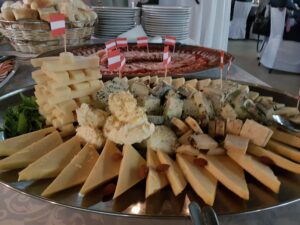
Ziegen Peter im Weinblatt, produced by Premiumkäserei Pranz, was named Austria’s best cheese.
This goat’s milk cheese, presented with a vine leaf, illustrates how different agricultural traditions can be combined to create a distinctive speciality product.
Germany also received recognition for Friesisch Blue, produced by Rohmilchkäserei Backensholz. Although this cheese originates in northern Germany rather than the Alpine region, it demonstrates the strength of the country’s raw milk cheese sector.
Spain leads the medal table
The host country collected the largest number of awards, according to a preliminary analysis of the competition results published on 16 November by the specialist platform Cultura del Queso.
The ten leading countries in that assessment were:
- Spain: 818 awards
- Italy: 387
- Switzerland: 290
- Netherlands: 110
- Austria: 84
- France: 77
- Norway: 55
- Portugal: 51
- Belgium: 41
- Ireland: 31
Spain also secured 37 Super Gold awards and placed three cheeses among the 14 finalists.
Its highest-scoring finalist was Curado Fuente La Sierra, a matured sheep’s milk cheese produced in the Córdoba region, which received 78 points.
A goat’s milk cheese decorated with edible flowers from Queronsa and the matured sheep’s milk cheese El Roble de Campollano also reached the final.
However, overall medal totals should be interpreted cautiously, given differences in the number of entries submitted by each country and the preliminary nature of the figures.
 Only 14 finalists out of 5,330 entries
Of all the cheeses entered, 108 received Super Gold recognition, representing approximately 2% of the competition.
Only 14 progressed to the world final, equivalent to roughly one cheese in every 381 entries.
Cheeses are assessed through blind judging, taking into account their appearance, structure, aroma, texture and, most importantly, flavour.
The competition also demonstrates how extended maturation can significantly increase the value of a dairy product.
However, this requires suitable facilities, regular monitoring, specialist knowledge and considerable financial resources. A cheese matured for two years represents capital that cannot immediately be recovered through sales.
This is one reason why specialised maturation businesses play such an important role in the French and Swiss cheese industries.
From Japan to South America
While European producers dominated the final, several important awards went to producers from other continents.
In Uruguay, Isabel Rodríguez of the family-run Los Vientos farm received recognition for her work in milk quality and cheesemaking.
The Japanese cheese Mikawa, produced by Faber, received recognition in the artisan category, while Argentina’s Parmesano Vaquero, matured for 18 months, was named the best Latin American cheese.
These achievements demonstrate the emergence of new centres of high-quality cheese production beyond Europe’s traditional dairy regions.
 Mountain pastures as an economic and cultural asset
The results of the World Cheese Awards 2026 confirm the importance of the agricultural model developed throughout the Alps and neighbouring mountain regions.
Competitiveness in these areas depends not only on milk production volumes but also on the ability to transform local milk into distinctive, high-value products.
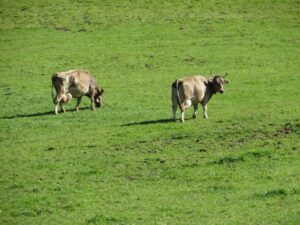
The botanical diversity of mountain pastures, locally adapted cattle breeds, traditional cheesemaking, protected geographical designations and specialist maturation expertise are complementary elements of this approach.
This model also helps maintain agricultural activity in mountain communities, preserve landscapes and transfer knowledge between generations.
The success of a cheese matured for two years in the cellars of a former military fortress illustrates how agriculture, cultural heritage, gastronomy and tourism can reinforce one another.
The next edition of the World Cheese Awards will take place in London in 2027.
Sources: Guild of Fine Food – World Cheese Awards, Interprofession du Gruyère, JuraFlore, Cultura del Queso.