France is one of the European countries with an exceptionally rich genetic heritage in cattle farming. According to data from a French publication dedicated to cattle breeds, at least 44 breeds are represented in the country, from the world-renowned Charolais and Limousin to local populations that have been raised for centuries in specific regions. However, the development of intensive production has taken a toll on this diversity. Since the mid-19th century, about forty local breeds or populations have disappeared from French pastures, while another twenty were threatened during the period described by the publication. These historical data show how much the modernization of livestock farming has changed the breed composition of the herds.
During the 20th century, mechanization gradually displaced the use of cattle for work, and production specialization led to the separation of dairy and beef breeds. The development of artificial insemination, performance testing, and organized selection made it possible to significantly increase productivity. Holstein became one of the most common dairy breeds, while Charolais and Limousin gained international importance in meat production. At the same time, numerous local breeds lost their economic advantage because they could not match the production performance of specialized animals.
 However, productivity is not the only trait that determines a breed’s value. The French publication particularly highlights robustness, ease of calving, disease resistance, and the ability to adapt to different rearing conditions. These traits are especially important in extensive systems, where production is based on natural pastures and the limited use of concentrate feed. Animals that have been bred for generations in mountainous and hilly regions often make better use of the available vegetation and are adapted to seasonal changes in nutritional conditions.
The differences between the French breeds clearly show how different production goals can be. Charolais is characterized by its large body mass, pronounced musculature, and high growth potential. Limousin is known for its good meat characteristics, robustness, and relatively easy calving. Aubrac, a breed originating from the French plateau of the same name, is adapted to using natural pastures and more modest feeding conditions. In traditional farming systems, cows of this breed are often crossed with Charolais bulls to combine good maternal traits and adaptability to the terrain with a greater potential for meat production in the offspring.
Similar differences exist among dairy breeds. The Brown Swiss, originating from Switzerland, is raised in various production systems and is valued for the quality of its milk, which is well-suited for processing. The Jersey, which originates from the island of the same name, is significantly smaller than the Holstein, but its milk has a high fat and protein content. Therefore, the economic value of dairy production cannot be judged solely on the number of liters produced.
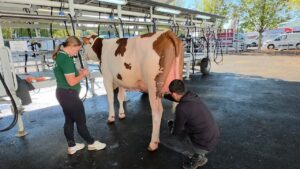 In the production of cheese and other dairy products, the total yield of milk components is also important. Local breeds are of special importance in the mountainous regions of Europe.
In the Alps, the Pyrenees, and the French Central Massif, traditional livestock farming developed under conditions of a short growing season, steep terrain, and long winters. Breeds adapted to such an environment made it possible to utilize pastures unsuitable for intensive arable farming. Pasture grazing also contributes to the preservation of open mountain landscapes and certain grassland habitats, provided that the number of animals is adapted to the pasture’s capacity.
The preservation of local breeds is also linked to the production of regional food specialties. In France, traditional livestock farming in many areas relies on the production of cheeses and meats with a recognized geographical origin. Quality and origin labels, such as AOP and IGP, allow such products to be distinguished in the market, although they do not always require the use of a specific breed. For producers in mountainous areas, this can be a way to generate greater added value without increasing the number of head of livestock.
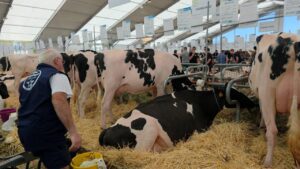 Modern selection today covers significantly more traits than before. In addition to milk quantity and gain, increasing attention is paid to fertility, longevity, animal health, and feed efficiency. Génomics selection allows for an earlier assessment of genetic potential, but it also requires kinship control and the preservation of genetic variability. For small breeds, organized breeding programs, the preservation of reproductive material, and maintaining sufficiently large live populations are particularly important.
The French experience shows that high-yielding and traditional breeds have different roles in livestock farming. The former enable the intensive production of large quantities of milk and meat, while the latter often possess traits important for extensive farming, the use of mountain pastures, and the production of regional specialties. Preserving this genetic wealth is also important for future selection needs, as once lost, inherited combinations cannot be easily restored.