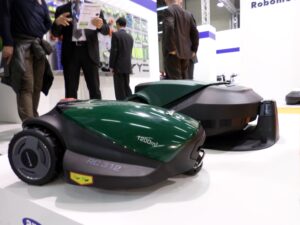
Lawn maintenance in European households, hotels and tourist facilities is gradually changing. A task that for decades required regular human involvement and conventional mowing equipment is increasingly being entrusted to autonomous machines. Robotic lawn mowers independently plan their routes, detect obstacles and return to their charging stations, while owners can monitor their operation and manage green space maintenance through mobile applications.
This development is particularly relevant to the Alpine region, where high labour costs, workforce shortages and challenging terrain are encouraging greater automation. In Switzerland, Austria, Germany and northern Italy, robotic lawn mowers are becoming an increasingly important alternative to traditional lawn maintenance methods.
At the same time, competition in the European market is intensifying, with Chinese manufacturers increasingly challenging the dominance of established European companies.
Chinese manufacturers are reshaping the market
For many years, the European robotic lawn mower market was shaped by companies such as Husqvarna, Gardena and Bosch. Swedish manufacturer Husqvarna, one of the pioneers of autonomous lawn mowing, established a strong position through its extensive experience, well-developed distribution network and brand recognition.
However, companies such as Segway Navimow, Mammotion and Sunseeker have been expanding their presence in the European market in recent years. Their strategy is based on the rapid introduction of new technologies and competitive pricing.
Satellite navigation, cameras, artificial intelligence and all-wheel drive systems are becoming important selling points. Technologies once found mainly in the most expensive machines are now increasingly available in more affordable product categories.
The intensity of this competition was highlighted in a Reuters report published in October 2026, which stated that Husqvarna had lost part of its European market share in terms of robotic lawn mower units sold. The company is considering adjustments to its entry-level pricing to respond to growing competitive pressure while seeking to maintain its position in the premium segment.
For consumers, this competition means a wider choice of products and greater opportunities to purchase technologically advanced equipment at more accessible prices.
Lawn mowers that recognise their surroundings
One of the most significant technological developments is the gradual move away from systems that require a physical boundary wire to be installed around the lawn.
Modern models use a combination of satellite positioning, cameras and computer-based systems capable of analysing their surroundings. RTK technology enables more accurate positioning, while visual navigation helps machines detect obstacles and adjust their routes.
On certain models, mowing boundaries can be defined digitally through a mobile application. Owners can establish different working zones, schedule mowing operations and designate areas that the machine should avoid.
However, even the most advanced systems have limitations. Dense trees, tall buildings and unfavourable satellite reception conditions can affect navigation accuracy. Manufacturers are therefore developing solutions that combine several positioning methods.
Alpine terrain presents particular challenges
In Switzerland, Austria and other mountainous regions, the ability of robotic lawn mowers to operate on sloping and uneven ground is a particularly important consideration.
New generations equipped with all-wheel drive significantly expand the range of possible applications. Certain models from Mammotion and Sunseeker are rated to operate on slopes of up to 70%, equivalent to an angle of approximately 35 degrees.
These capabilities are particularly attractive to owners of mountain hotels, tourist facilities and private properties where landscaped lawns are often situated on hillsides.
However, the maximum advertised slope rating does not guarantee equally reliable operation under all conditions. Wet grass, slippery soil, stones and uneven surfaces can significantly affect performance and safety.
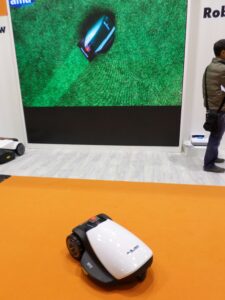
For this reason, buyers should consider the actual conditions of their property rather than relying solely on technical specifications provided in product catalogues.
How much does automated mowing cost?
The European market offers robotic lawn mowers across a wide range of price categories.
Entry-level models designed for smaller lawns can generally be found for approximately €500 to €1,000. Machines with more advanced navigation, greater working capacity and additional features often fall within the €1,000 to €3,000 category.
Robotic mowers designed for large areas and more demanding operating conditions can cost considerably more.
These figures are indicative price ranges rather than verified current retail offers. Actual prices vary depending on the country, manufacturer, equipment and sales conditions. In Switzerland, prices are quoted in Swiss francs, and comparisons should also take account of differences in taxation, warranties and after-sales services.
Buyers should pay particular attention to the total cost of ownership, including battery replacement, cutting blades, maintenance and potential repairs.
Changing maintenance practices in Alpine tourism
Automated mowing could become particularly important in the Alpine tourism sector.
Hotels, mountain guesthouses, restaurants and tourist accommodation facilities often have extensive green spaces requiring regular maintenance throughout the season.
In countries with high labour costs, such as Switzerland, the ability to assign some of these tasks to autonomous machines represents a significant economic advantage.
Instead of periodically cutting large quantities of grass, robotic lawn mowers can operate more frequently and maintain a relatively uniform lawn height. Many models use a mulching system, leaving finely cut grass on the surface.
This approach also changes the organisation of maintenance work. Employees can spend less time operating lawn mowers and more time performing other tasks, while the machines are monitored and adjusted when necessary.
Nevertheless, robotic lawn mowers cannot entirely replace human labour. Maintaining edges, removing obstacles and mowing difficult-to-reach areas may still require manual intervention.
From landscaped lawns to mountain agriculture
The development of robotic lawn mowers also raises questions about their wider potential in agriculture.
Although machines designed for private lawns are becoming increasingly sophisticated, they are not intended for maintaining extensive Alpine pastures with tall vegetation, rocks and complex terrain.
Specialised equipment is being developed for such conditions, including remote-controlled mowers, robotic tool carriers and autonomous vegetation management systems.
This development is particularly relevant to mountain agriculture, where working on steep slopes is physically demanding and often involves an increased risk of injury.
In the future, advances in sensors, navigation systems and electric drive technology could enable autonomous machines to be used more widely beyond landscaped green spaces.
Technology is changing both the market and everyday habits
The development of robotic lawn mowers demonstrates how automation is gradually expanding beyond industry and large agricultural operations into everyday activities.
For buyers, engine power, cutting width and energy consumption are no longer the only decisive factors. Navigation reliability, operational autonomy, ease of use and the ability to adapt to different terrain conditions are becoming increasingly important.
At the same time, growing competition between European and Chinese manufacturers is accelerating technological development and changing pricing dynamics across the market.
For Alpine countries, where high labour costs often coincide with challenging natural conditions, these developments are particularly significant.
Robotic lawn mowers therefore represent more than simply a new generation of garden equipment. They are part of a broader transformation in working habits, in which an increasing number of repetitive tasks are entrusted to autonomous machines, while the human role gradually shifts from direct physical labour towards planning, supervision and technology management.